
At Advanced Neurosurgery Associates, we understand how overwhelming it can feel when a child is diagnosed with scoliosis. When the spine begins to curve during growth, parents naturally worry about their child’s posture, comfort, and long-term health. Our role is to guide families through this journey with clarity, expertise, and compassion.
We specialize in comprehensive pediatric spinal care, and surgical treatment is a core part of our expertise. While some spinal curves remain mild and monitored, many scoliosis cases progress as children grow. When we see a curve progressing, our goal is to act at the right time—before the curve becomes severe and affects confidence, mobility, or lung function.
Every family we meet wants the same outcome: a future where their child stands tall, stays active, and feels confident. With early detection and skilled surgical care, many children achieve exactly that—and we are here to support you through every step.
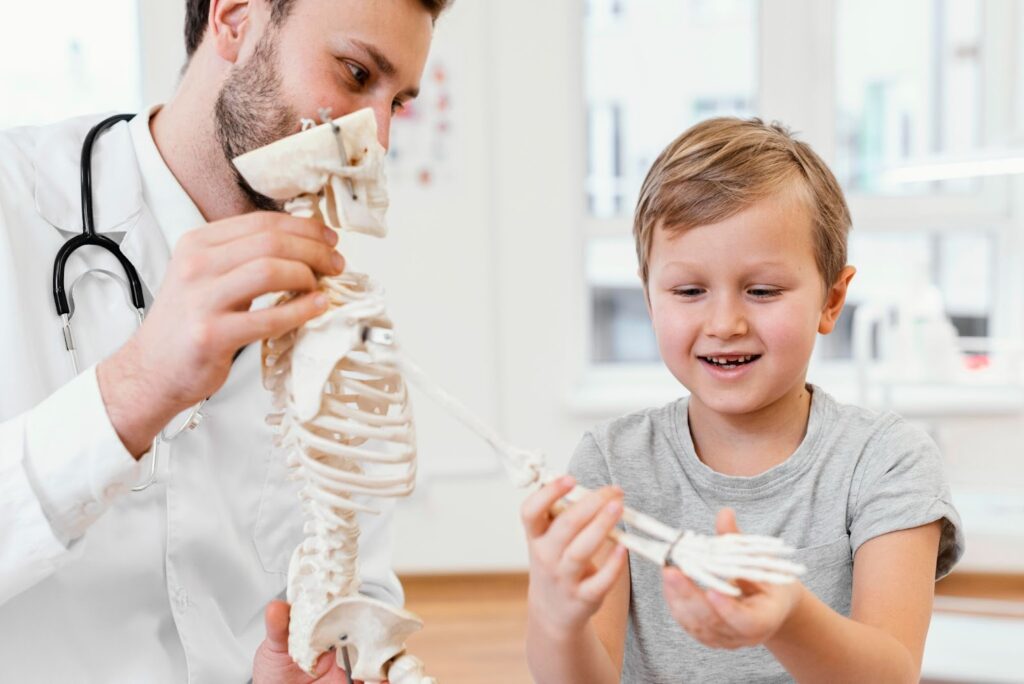
Understanding Pediatric Scoliosis
Pediatric scoliosis develops when the spine curves sideways into an “S” or “C” shape. Instead of staying straight, the spine shifts, which can affect posture, movement, and appearance. Most of the families we meet tell us they first noticed the curve during a sudden growth spurt—often between ages 8 and 15 — when the spine changes quickly.
We focus on treatment that protects a child’s growing spine, supports proper alignment, and prevents the curve from worsening. When surgery is needed, we use modern techniques to correct the curve and reinforce stability, helping children return to daily life with renewed confidence.
The Early Signs We Tell Parents to Watch For
Parents know their children best, and you are often the first to spot that something isn’t quite right. We encourage families to watch for subtle physical changes, especially during rapid growth.
Here are early signs we want you to look for:
- Uneven shoulders or hips
- One shoulder blade is sticking out more than the other
- a rib hump when your child bends forward
- clothing suddenly hanging unevenly
- leaning to one side when standing
- The spine is visibly curving
- One side of the back appears higher
Children don’t always complain of pain when scoliosis begins, so visual changes are often the first clue. If you notice any of these signs, we recommend scheduling a spine evaluation.
Early diagnosis allows us to prepare an appropriate treatment plan—including deciding when surgery may offer the most benefit.
Why Early Detection Makes a Difference
When we detect scoliosis early, we have a better chance of preventing curve progression. This allows us to:
- preserve spinal alignment
- protect lung and organ development
- reduce the need for more complex surgery in the future
- Schedule surgery at the safest time for growth
- support mobility and strength long-term
We partner closely with families from the earliest signs, so we can act before the curve limits your child’s activities or confidence. In our experience, early partnership leads to stronger results and smoother recovery.

How We Diagnose Pediatric Scoliosis
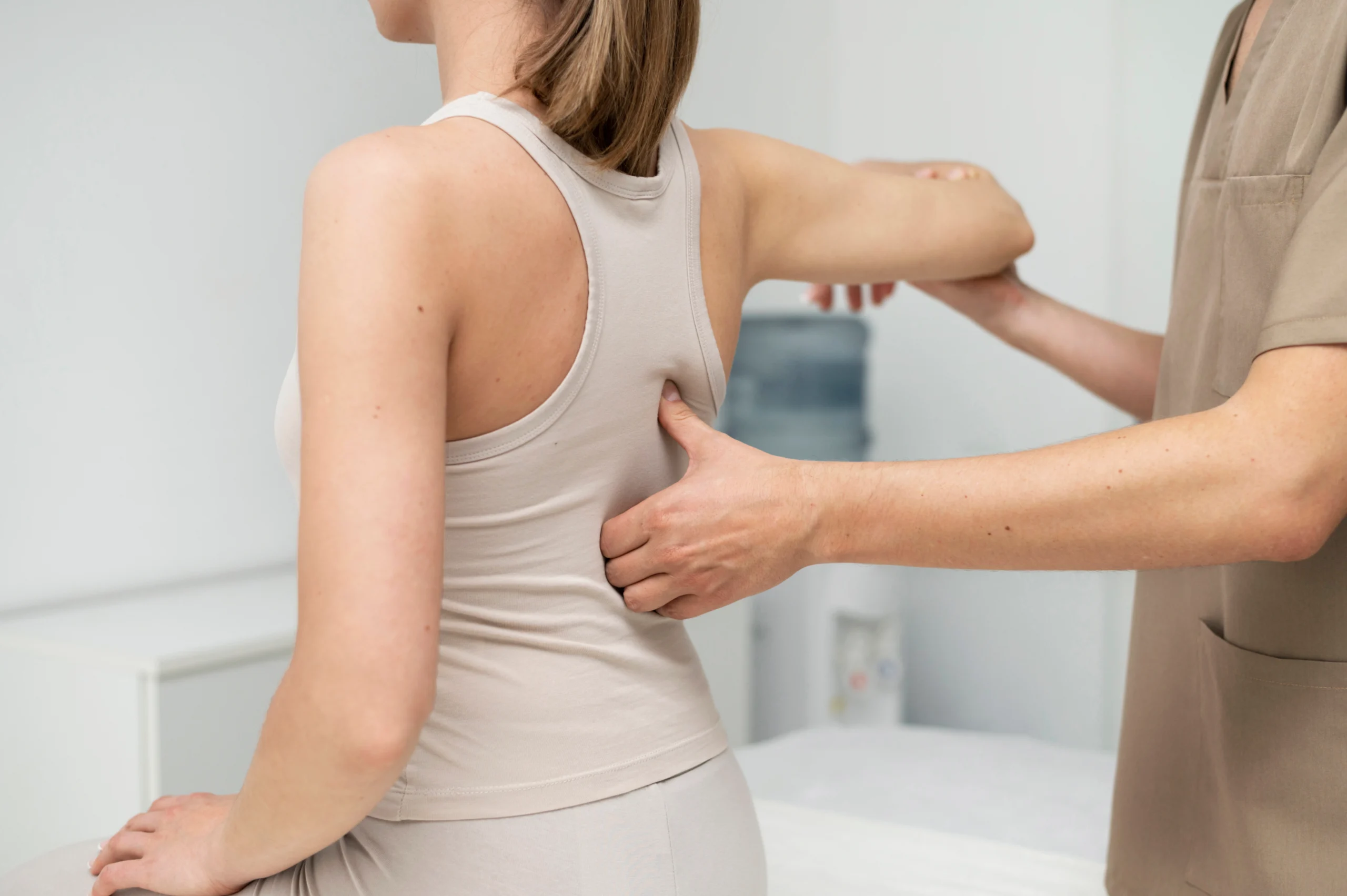
When you come to us, we start with a detailed physical exam and imaging tests to measure the Cobb angle, which tells us how severe the curve is. The angle—combined with growth potential—helps us determine whether your child needs surgery soon or should be monitored over time.
Our evaluation focuses on:
- how much the spine is curving
- how quickly the curve is changing
- How much growth does your child have left
- whether the appearance or function is already affected
If we see that a curve is progressing toward the surgical range—usually 40–50 degrees or greater — we discuss surgical timing with families so we can prevent long-term deformity, discomfort, or breathing limitations.
Many families in our region begin their search looking for a scoliosis surgeon in New Jersey, and we are proud to support children and families throughout the state and beyond.
Why Surgery Is Often the Most Effective Treatment for Progressive Scoliosis
We focus on surgery because it remains the most successful method of correcting moderate to severe curves and preventing progression. While monitoring has its place, surgery is what ultimately restores alignment and protects the spine as children grow into adulthood.
When we recommend surgery, we consider:
- curve size and severity
- your child’s age and future growth
- How quickly the curve has progressed
- The impact on posture and lung space
Our surgical approach aims to:
- stabilize the spine
- correct spinal curvature
- improve posture and alignment
- prevent curve progression
- support lung function and daily activities
Our experience has shown us that timely surgery helps children and teenagers regain confidence, return to sports, and look forward without fear of worsening deformity.
Surgical Techniques We Offer at ANA
Every child’s spine is unique, and we choose the surgical approach based on age, curve pattern, and growth needs.
At ANA, we perform:
Spinal Fusion
The most common surgery for older children and teens. We straighten the spine, secure it with advanced hardware, and create a fusion to maintain correction.
Growth-Friendly Techniques
For younger children with significant growth ahead, we use expandable implants or guided growth technology to correct alignment while allowing height to continue increasing.
Vertebral Body Tethering
In select cases, we use flexible tethering to correct the curve while helping the spine maintain more natural motion.
Each approach is designed to offer lasting correction, improved alignment, and stronger long-term outcomes.
Recovery: What Families Can Expect After Surgery
We walk with families throughout recovery so children can return to normal life as smoothly as possible. Most children:
- Walk within days
- Go home within a week
- return to school in four to six weeks
- gradually return to sports with surgeon clearance
Many of our patients tell us that the confidence they feel after standing taller — with improved posture and balance — becomes one of the most meaningful parts of their recovery.
Why Families Trust Advanced Neurosurgery Associates
Families choose us because we provide:
- Board-certified spine surgeons experienced in pediatric care
- Modern surgical techniques proven to correct spinal curves
- clear communication that supports informed decision-making
- personalized surgical planning centered on growth and safety
- multiple New Jersey locations for convenient expert care
We don’t just perform a surgery — we support your child’s future movement, health, and confidence.
How We Help You Make the Right Decision
You deserve clarity, honesty, and guidance you can trust.
When you come to us, we give you:
- a complete explanation of your child’s curve
- a clear treatment timeline
- direct answers about surgery and outcomes
- support before and after surgery
- long-term spine care and monitoring
Our commitment is simple: we treat every child as if they were our own.
Taking the Next Step With Us
If you have noticed posture changes or received a scoliosis diagnosis, we are here to guide you. At Advanced Neurosurgery Associates, we provide surgical expertise, personalized care, and long-term support so your child can move confidently into the future.
We encourage you to reach out, ask questions, and learn about your child’s options. Together, we can make the right decisions — at the right time — for your child’s spine and growing future.
FAQs:
1. When should I schedule an evaluation for my child?
Any time you notice uneven shoulders, a visible curve in the spine, or posture changes, it’s best to schedule an evaluation. Early assessment helps determine whether your child may need surgery in the future.
2. Will my child need surgery immediately after diagnosis?
Not always. Some curves are monitored first, while others progress quickly and require timely surgical treatment. Your surgeon will explain the best timing based on your child’s spine curvature and growth stage.
3. How do I know if my child’s curve is getting worse?
Watch for changes in posture, clothing fit, and symmetry in the shoulders, ribs, and hips. Follow-up imaging helps track progression. Rapid growth periods are when curves tend to worsen the fastest.
4. What is the recovery like after pediatric scoliosis surgery?
Most children walk within a few days, return home within a week, and go back to school in four to six weeks. Full activity—including sports—may be resumed after healing and surgeon clearance.
5. Can scoliosis cause long-term problems if untreated?
Yes. Severe curves can lead to posture issues, reduced lung capacity, discomfort, and appearance concerns. Surgery helps prevent these long-term effects by correcting and stabilizing the spine.
6. Is scoliosis surgery safe for young children?
Scoliosis surgery is carefully planned and performed using advanced techniques that prioritize safety. Choosing an experienced surgical team helps ensure the best outcomes.
7. How do I choose the right specialist for my child’s surgery?
Look for experience in pediatric scoliosis, board certification, and a strong surgical track record. Many families search for a scoliosis surgeon in New Jersey to find specialized care close to home.
8. Can my child return to sports or dancing after scoliosis surgery?
In many cases, yes. Once healing is complete and your surgeon approves activity, children often resume athletics, play, and physical activities without restrictions.
9. Will my child have noticeable scars after surgery?
Modern surgical approaches are designed to minimize scarring whenever possible. Your surgeon will explain incision placement and what to expect long-term.
10. How long will the surgical correction last?
Scoliosis surgery is intended to provide lasting correction. Most children maintain alignment throughout adulthood and do not require additional procedures unless rare complications occur.