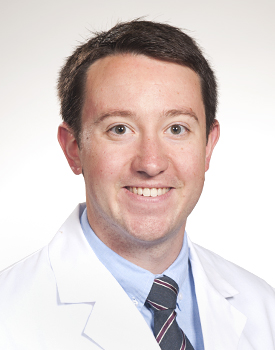
Arno H. Fried, MD, FACS, FAANS
Pediatric & Adult Neurosurgeon
Pediatric epilepsy is one of the most common neurological conditions in children. It causes repeated seizures and affects how the brain works. Families dealing with pediatric seizures New Jersey or looking for a trusted child epilepsy specialist Rutherford NJ should seek care early.
At Advanced Neurosurgery Associates, our experienced epilepsy specialist doctor team provides personalized care for children with epilepsy and other seizure disorders. We use advanced testing to find the cause of seizures. Then we build a treatment plan that fits each child.
Epilepsy can affect more than just seizures. Some children also face:
Our team, led by a pediatric neurosurgeon NJ, provides full care that supports the whole child and family.
We offer a full range of care, including:
Our goal: fewer seizures, protected brain development, and a better quality of life.
With nearly 60 years of combined experience, our specialists have helped many children gain better seizure control and long-term success. Families across New Jersey trust our team for compassionate, expert care.
If your child has seizures or an epilepsy diagnosis, contact Advanced Neurosurgery Associates today at 201-457-0044. Schedule an appointment with a leading epilepsy specialist for advanced pediatric epilepsy treatment in NJ.
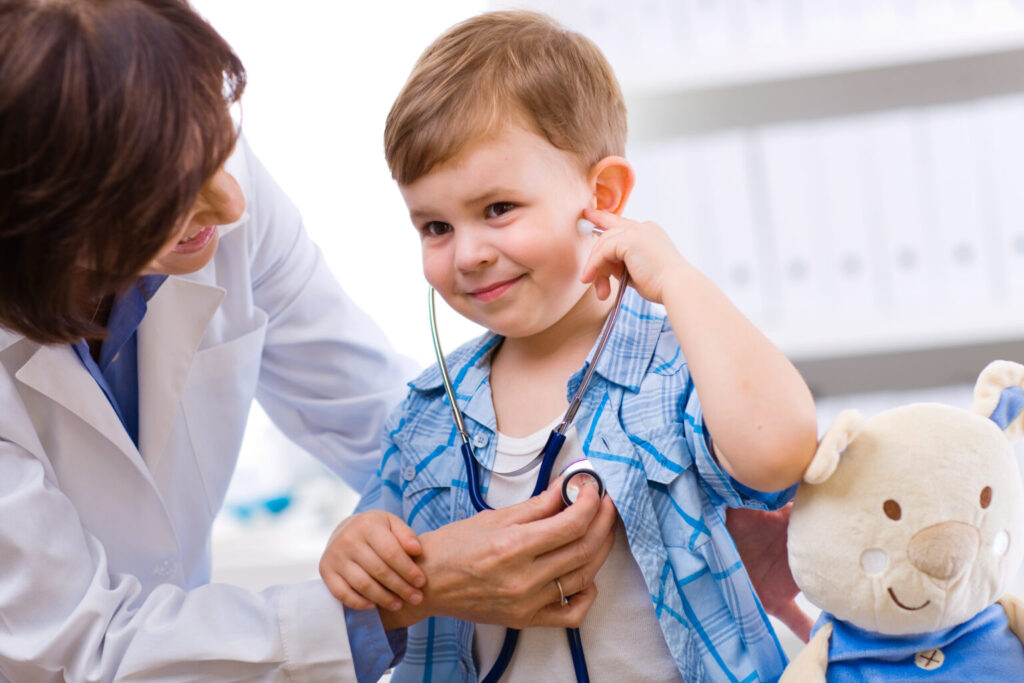
At Advanced Neurosurgery Associates, our experienced pediatric epilepsy specialist NJ doctors know epilepsy affects more than seizures. It can also touch a child’s learning, behavior, emotions, and daily life. That’s why we offer team-based, family-centered care for every child.
Pediatric epilepsy may impact:
Families searching for epilepsy specialists near me trust our team, led by a pediatric neurosurgeon New Jersey families rely on, to address these challenges. We focus on long-term seizure control and healthy development for every child.
Meet Our Expert Team
At ANA — Movement. Vitality. Medicine., we’re committed to exceptional pain, vein, and wellness care that helps you reclaim your health and well-being. Our team includes Harvard-trained experts, including a skilled epilepsy specialist doctor, working together to deliver transformative outcomes that restore comfort, confidence, and quality of life. ANA stands for our mission to help every patient relieve discomfort, restore motion, and renew life.
Pediatric epilepsy may be due to a medical condition or an injury that affects the brain, or the cause could be idiopathic (of unknown origin).
Common known causes of pediatric epilepsy include:
An ongoing treatment program is one approach to living with epilepsy, although there are instances when seizures might disappear. For example, some types of epilepsy ease at puberty, where children might appear to “outgrow” their seizures.
These three grades of concussions were characterized as follows: Grade 1 was characterized by transient symptoms and Grade 3 was the most serious and requires immediate medical attention.
An epilepsy diagnosis requires evaluating the cause of epilepsy and to determine whether the seizure disorder falls within a recognized syndrome.
An epilepsy diagnosis is a multi-step process, usually involving:
Initially, the patient’s own testimony will be elicited for a medical history. However, depending on age, and also because the patient is often unaware during a seizure, a witness(s) can adequately describe the seizure characteristics and patterns. Thus, in keeping with our family-centered and sensitive approach, we engage family and caretakers as an important part of the diagnosis and evaluation process.
An EEG (electroencephalogram) will be done to check the electrical activity in the brain. People with epilepsy will often have abnormal electrical activity seen on this test. In some cases, the test may show the area in the brain where the seizures start.
There are many decisions for parents during the process of diagnosing the type of your child’s epilepsy and deciding the best treatment option.
As in every case treated at ANA, each candidate for surgery is reviewed by our team of experts, and a consensus decision is made with both medical staff and in constant and methodical communication with the child’s family.
Our care approach extends beyond our patients to their families and caregivers, because we know how important a support system is during these tough times. You can read about our physicians and our team.
Certain diagnostic tests may be performed to determine if surgery would be an effective treatment. This surgical evaluation can involve a number of tests to develop the diagnosis of the cause and location of the epileptic seizures.
Evaluation prior to surgery for epilepsy has changed radically in the past few decades, most notably since the advent of long-term video-electroencephalography (EEG) monitoring in the late 1970s, and advanced neuroimaging, specifically with the additional use of MRI.
To develop the epilepsy diagnosis before surgery, patients partake in extensive testing, such as:
It is also important to consider the emotional effects. Neuropsychology and psychiatry are a vital part of ANA’s epilepsy team’s evaluation.
Electroencephalography (EEG) is the fundamental measure of identifying seizure focus. The epileptologists on our team are adept at reading the spikes and sharp waves that constitute a spectrum of shifting seizure focus. Most patients undergoing evaluation for surgery will require EEG with video telemetry to document the seizure pattern.
However, an appropriate focus goes beyond single readings. Our experts evaluate EEG monitoring over a period of time. This is a critical measure to determine a clear onset and location of seizure activity.
While computerized tomography (CT) scan can provide some useful information about lesions which may be causing seizures, the “gold standard” for locating and evaluating brain lesions is magnetic resonance imaging (MRI). The greatest advance of MRI technology for epilepsy is the incredible clarity of both the normal and pathological anatomy of the brain. Since the mid-1980s, this technology has allowed us to routinely identify lesions that were previously undetectable.
Nuclear medicine, which deals with imaging the body for both diagnostic and treatment purposes, plays an important role in the pre-surgical assessment of patients with refractory epilepsy. This is evident in the case of single-photon emission computed tomography (SPECT) which is used to determine the seizure onset zone.
SPECT (single proton emission computed tomography) has an important role in the investigation of surgical candidates. Ictal (meaning taking place during a seizure) SPECT has also been useful to study seizure-spread patterns. Blood flow increases in the brain area in which the seizure originates and the blood flow can become less than normal in that same area during non-seizure states. By injecting a small and safe amount of a radioactive substance into a patient’s blood stream via IV we can evaluate the blood flow in the brain at a given time. Changes in blood flow during and after a seizure can be helpful in localizing seizure focus and spread patterns.
Treatment depends on several factors. These include the type and severity of seizures, the cause of epilepsy, the child’s age, and overall health. At Advanced Neurosurgery Associates, we offer personalized epilepsy treatment NJ based on each child’s needs.
Some children’s seizures don’t respond to medication. In these cases, epilepsy surgery may be the right choice. Early treatment helps reduce seizures and supports healthy brain development.
Every patient goes through a full evaluation first, including:
Our experienced team works together to find the most effective epilepsy treatment NJ for each child, delivering the best possible care every step of the way.
At least half of those newly diagnosed with epilepsy will become seizure-free with their first medication—if they take it regularly and as prescribed. The efficacy of these medications of course depends on the type and severity of the epilepsy. In some cases, medication may diminish but not completely control all seizure activity.
Many various types of anticonvulsant (also called antiepileptic) drugs are available. Some patients respond to one drug and some may need more than one. It may take several months before the best drug and dosage are determined. Patients are monitored throughout the medication process via blood tests.
A ketogenic diet, one which supplies the majority of calories from fat as opposed to glucose, mimics the body’s response to starvation by burning fat for energy. Scientists are not precisely sure why this diet prevents seizures, although it is being studied. Estimates vary from 10-30% of children who try it become seizure free, or almost seizure free. And over half who try it gain a 50% reduction in seizures. The remainder do not respond or are unable to tolerate the diet because of side effects.
The most common form of epilepsy surgery is a lobectomy or cortical resection. It is estimated that approximately 30% of patients with partial epilepsy have seizures that are not well controlled with medications and could benefit from this surgery.
Seizures in the temporal, parietal, frontal or occipital lobes may be treated surgically if the seizure-producing area can be safely removed without damaging vital functions.
Corpus callosotomy is the sectioning, or separating of the corpus callosum—a nerve bridge which connects the two halves of the brain and integrates its functions. Separating the cerebral hemispheres reduces generalized seizures by confining the spread of an epileptic discharge to one cortex.
A corpus callosotomy may be performed when partial seizures secondarily generalize and it’s not possible to identify a single epileptic focus, or when resection of a localized focus would cause a pronounced neurological deficit. Uncontrolled generalized seizures may also be treated with this type of surgery.
The operation may be done in two steps. The first operation partially separates the two halves of the brain, but leaves some connections in place. If the generalized seizures stop, no further surgery is done. If they continue, a second operation to complete the separation may be performed.
When a child has Rasmussen’s encephalitis, a rare, progressive disease affecting one whole hemisphere of the brain, a hemispherectomy may be performed.
A hemispherectomy is the removal of all or almost all of one side of the brain. Weakness on the side opposite the operation will continue, but the half that remains takes over many of the functions of the half that was removed.
Hemisperectomies may also be performed when children are born with conditions that cause excessive damage to one side of the brain, such as bleeding in the brain prior to birth.

Of the approximately 150,000 people in the U.S. who develop epilepsy each year, 20,000 to 45,000 are children and adolescents. The highest risk group in the pediatric population is infants between 1 and 12 months of age.
Pediatric epilepsy is defined as two or more unprovoked seizures occurring more than 24 hours apart in a child older than one month. Seizures are episodes of abnormal brain activity that can affect movement, behavior, awareness, or consciousness.
Have more questions about your child’s diagnosis? Schedule a consultation with an experienced pediatric epilepsy specialist at Advanced Neurosurgery Associates.
Pediatric brain and spine tumors are abnormal growths that develop in the brain, spinal cord, or surrounding tissues during childhood. They are among the most common solid tumors diagnosed in children and require specialized evaluation because a child’s brain and spine are still developing.
Some tumors grow slowly and remain localized, while others grow more rapidly and require prompt treatment. Even benign tumors may cause serious symptoms if they place pressure on important areas of the brain or spinal cord.
Our pediatric brain tumor specialists carefully evaluate every child to determine the tumor type, location, and the most appropriate treatment approach. When spinal tumors require surgery, our experienced spine surgeon New Jersey team collaborates with pediatric specialists to provide safe, effective care tailored to growing children. Get a Second Opinion
Epilepsy in children can happen because of brain injuries, infections, birth defects, or genetic factors. In some cases, the exact cause is not known. Specialists at Advanced Neurosurgery Associates (ANA) evaluate children carefully to understand the possible cause of seizures.
A child may have epilepsy if they have repeated seizures, staring spells, sudden confusion, or unusual body movements. If these symptoms happen more than once, it is important to see a doctor for evaluation.
Some children with epilepsy may experience behavioral or emotional changes, such as irritability, anxiety, or difficulty focusing. This can happen because seizures affect brain activity or due to stress from the condition.
Seizures can sometimes be prevented by taking medications as prescribed, getting enough sleep, managing stress, and avoiding known triggers such as flashing lights or missed medication.
Yes, some children outgrow epilepsy as they get older, especially if their seizures are mild and well-controlled with treatment.
Early signs may include staring spells, sudden confusion, brief jerking movements, unusual behavior, or loss of awareness. These symptoms may happen suddenly and last for a short time.
Yes, epilepsy can sometimes affect memory and concentration, especially if seizures happen often. Proper treatment can help manage these symptoms.
Some children may have mood changes, irritability, or trouble concentrating, but many children with epilepsy live normal and active lives with proper treatment.
Some children may have mood changes, irritability, or trouble concentrating, but many children with epilepsy live normal and active lives with proper treatment.
Epilepsy can start at any age, but it often begins in early childhood or during the teenage years. Some children may have their first seizure in infancy, while others develop epilepsy later as they grow. Early diagnosis helps doctors manage the condition and control seizures effectively.
Living with epilepsy can be overwhelming for the whole family but seizure freedom is possible. Our pediatric epilepsy specialists provide thorough evaluation, advanced surgical options, and compassionate, ongoing support to help your child thrive.