

Would you know the difference between a normal childhood headache and a symptom of something far more serious? Most parents wouldn’t, and that’s exactly the problem.
Pediatric brain tumors are rare. But when they occur, the earliest clues are almost always disguised as everyday complaints: a stomachache, a clumsy fall, a “growth spurt” that never seems to end. That overlap is precisely why so many cases are caught later than they should be.
This guide breaks down exactly what to watch for, at what age, and when a symptom crosses the line from “probably nothing” to “call a specialist.” At Advanced Neurosurgery Associates, our board-certified neurosurgeons in New Jersey specialize in pediatric brain tumor diagnosis and treatment—and we’ve built this resource to help families recognize warning signs before they escalate.
What Are the First Signs of a Brain Tumor in a Child?
The most common early signs of a pediatric brain tumor are persistent morning headaches, unexplained vomiting, sudden vision changes, loss of balance or coordination, new seizures, and noticeable personality or behavior changes. Symptoms that last more than two weeks, worsen over time, or occur together—rather than as an isolated complaint—warrant evaluation by a pediatric neurosurgeon or pediatric brain tumor specialist.
Why Early Detection Matters So Much in Children
A child’s brain is still under construction. Every region is actively wiring itself for skills they’ll use for the rest of their lives—talking, walking, remembering, and regulating emotion. That’s what makes even a small tumor disproportionately disruptive. A growth the size of a grape can quietly interfere with the following:
- Balance and coordination
- Speech and language development
- Vision
- Memory and learning
- Movement and motor control
- Hormone production and growth
Here’s the encouraging part: the earlier a tumor is found, the more treatment options exist—and the better the odds of preserving normal brain function long-term. Delay is the real enemy here, not the diagnosis itself.
If your child has neurological symptoms that persist or don’t add up, don’t wait it out. A pediatric brain tumor specialist can rule serious causes in or out—often with a single MRI.
What Exactly Is a Pediatric Brain Tumor?
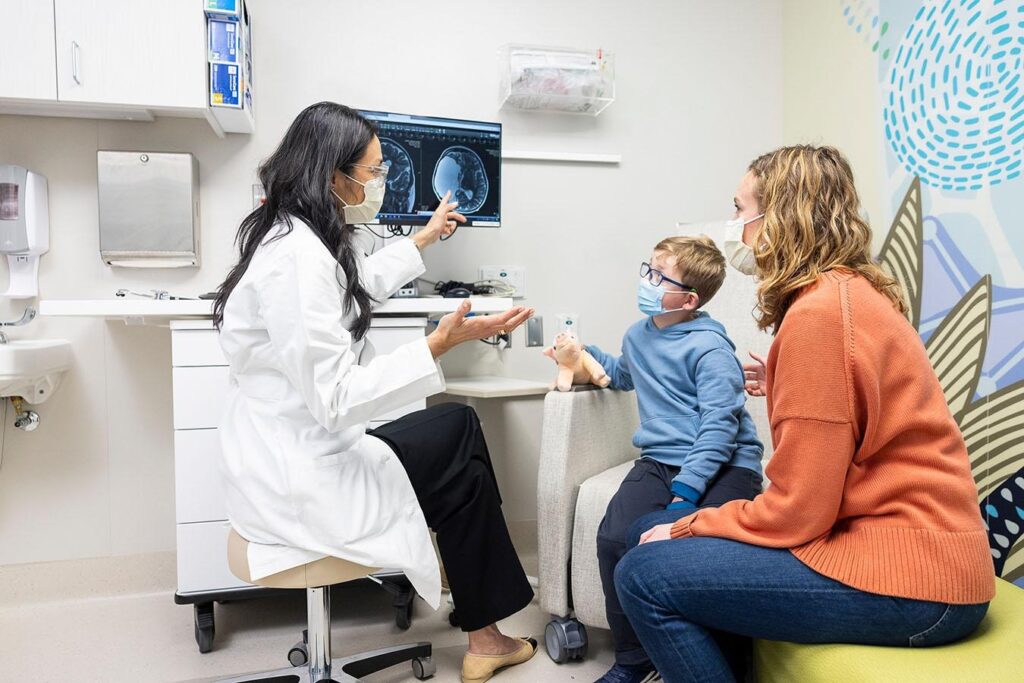
A pediatric brain tumor is an abnormal cluster of cells growing inside or around the brain. Tumors fall into two broad categories:
- Benign (non-cancerous)—doesn’t spread but can still press on critical brain structures
- Malignant (cancerous) – can grow and spread more aggressively
Both types can cause symptoms, either by raising pressure inside the skull or by physically disrupting the brain function of the area where they sit. Common locations include the cerebellum, brainstem, cerebrum, pituitary gland, and ventricles—and the location almost entirely determines which symptoms show up first.
The Complete List of Brain Tumor Symptoms in Children
1. Persistent Headaches
Not all headaches are equal. Pay closer attention if they:
- Happen frequently or won’t go away
- Wake your child up in the middle of the night
- Are noticeably worse first thing in the morning
- Get progressively more severe over weeks
- Don’t respond to typical over-the-counter medication
Red flag combo: Morning headaches paired with vomiting is one of the most classic warning signs in pediatric neurology and deserves prompt evaluation.
2. Frequent, Unexplained Vomiting
Vomiting with no stomach bug in sight can signal rising pressure inside the skull. Watch for:
- Vomiting that happens mainly in the morning
- Recurring nausea with no clear trigger
- Vomiting that shows up alongside headaches
3. Sudden Vision Changes
When a tumor affects the visual pathways, children may experience:
- Blurry or double vision
- Eyes that appear crossed
- Trouble focusing on objects
- Loss of peripheral (side) vision
Young children often can’t articulate “my vision is blurry”—so watch for behavioral clues instead, like sitting unusually close to the TV or bumping into furniture.
4. Balance and Walking Problems
Because the cerebellum controls coordination, tumors here often show up as:
- Frequent falls
- New clumsiness
- Difficulty walking in a straight line
- Trouble climbing stairs
5. Seizures
A first-time seizure of any kind is always an emergency room visit—no exceptions. Presentations vary widely:
- Full-body convulsions
- Brief staring spells that look like daydreaming
- Muscle jerking
- Facial twitching
Not every seizure means a tumor is present, but imaging is typically recommended to rule it out.
6. Behavioral or Personality Changes
Some of the most overlooked symptoms aren’t physical at all. Watch for a child becoming:
- Irritable or easily frustrated
- Withdrawn or uninterested in things they used to enjoy
- Unusually sleepy during the day
In older children and teens, this can also show up as memory lapses, poor concentration, or a sudden, unexplained drop in school performance.
7. Weakness in the Arms or Legs
Motor control issues might look like:
- A weaker grip than usual
- Difficulty holding objects
- Dragging one foot while walking
- One-sided weakness
8. Speech Difficulties
Depending on where the tumor sits, speech symptoms can include the following:
- Slurred speech
- Trouble finding the right words
- Difficulty following conversations
- Delayed speech milestones in younger children
9. Hormonal Changes
Tumors near the pituitary gland can throw hormone regulation off balance, causing:
- Unexpected growth delays
- Early or delayed puberty
- Increased thirst
- Unexplained weight changes
Why Do Symptoms Vary So Much by Age?
Here’s something most parents don’t realize: the same tumor, in the same location, can look completely different in a 4-year-old versus a 16-year-old. A toddler can’t tell you their vision is doubling—they’ll just become clumsy or fussy. A teenager, on the other hand, can describe a headache in detail but may write off dizziness or mood changes as “just stress” or exam pressure. This is exactly why age-aware evaluation by a pediatric specialist (not just a general symptom checklist) matters so much.
Brain Tumor Symptoms in Teenagers and Young Adults

As kids move into adolescence, symptoms start to look more like the adult presentation:
- Persistent headaches
- Memory difficulties
- Mood or personality changes
- Vision or hearing changes
- Dizziness
- Seizures
- Balance issues
- Numbness or weakness
- Difficulty concentrating
Because these symptoms build gradually, they’re frequently mistaken for stress, migraines, or anxiety—especially in high-achieving students. The rule of thumb is simple: persistent neurological changes should never be brushed aside as child or young adult brain tumor symptoms.
When Should Parents Actually Be Concerned?
Reach out to a pediatric neurosurgeon if symptoms include the following:
- Continue for several weeks without improving
- Get progressively worse
- Occur together rather than in isolation
- Start interfering with school, sports, or daily routines
- Include seizures or any sudden neurological change
Key insight: A single symptom is rarely the alarm bell; it’s the combination and the trend that matter most. One headache is normal. Headaches plus morning vomiting plus new clumsiness, lasting three weeks, are not.
How Pediatric Brain Tumors Are Diagnosed
Diagnosis typically follows this sequence:
- Medical History – mapping the full symptom timeline and developmental history
- Neurological Examination – testing reflexes, vision, balance, coordination, strength, and sensation
- MRI Scan – the gold-standard imaging study for pediatric brain tumors
- CT Scan – sometimes used in emergencies for faster results
- Additional Testing – blood work, vision testing, hormone evaluation, or biopsy, depending on initial findings
Treatment Options for Pediatric Brain Tumors
There’s no one-size-fits-all approach. Treatment plans depend on tumor type, size, location, the child’s age, and overall health, and may include the following:
- Careful observation (for some benign, slow-growing tumors)
- Surgery
- Chemotherapy
- Radiation therapy
- Targeted therapy
- Rehabilitation and recovery support
At Advanced Neurosurgery Associates, our board-certified neurosurgeons in New Jersey collaborate closely with pediatric specialists to build individualized treatment plans that prioritize both safe tumor removal and long-term preservation of neurological function—because the goal isn’t just survival; it’s helping your child get back to being a kid.
Why Families Across New Jersey Choose Advanced Neurosurgery Associates
- Board-certified neurosurgeons with pediatric expertise
- Advanced diagnostic evaluation for brain tumors
- Minimally invasive surgical options when appropriate
- Comprehensive, family-centered neurological care
- Multiple convenient New Jersey locations
- Personalized, ongoing follow-up care
Our mission goes beyond treating the tumor—it’s helping children return safely and confidently to school, sports, friendships, and everyday life.
Frequently Asked Questions
What are the first signs of a brain tumor in children?
The earliest and most common signs include persistent headaches, unexplained vomiting, balance problems, vision changes, seizures, and noticeable behavioral changes.
Are headaches always caused by brain tumors?
No, most childhood headaches have nothing to do with brain tumors. However, headaches that worsen over time or occur alongside vomiting or neurological symptoms should be evaluated by a specialist.
Can teenagers develop brain tumors?
Yes. Brain tumors can occur during adolescence and may present as headaches, seizures, personality changes, memory problems, vision changes, or balance difficulties.
Which doctor treats pediatric brain tumors?
A pediatric brain tumor specialist or pediatric neurosurgeon leads diagnosis and treatment, typically working alongside neurologists, oncologists, and rehabilitation specialists.
When should I see a pediatric brain tumor specialist?
Seek evaluation if symptoms persist for weeks, worsen over time, or include seizures, unexplained weakness, repeated vomiting, or significant neurological changes.
Where can families find pediatric brain tumor specialists in New Jersey?
Advanced Neurosurgery Associates offers specialized pediatric neurosurgical care through experienced, board-certified neurosurgeons across New Jersey, providing advanced diagnosis and treatment for children and young adults.
Find Clarity with Expert Neurosurgical Care
|